
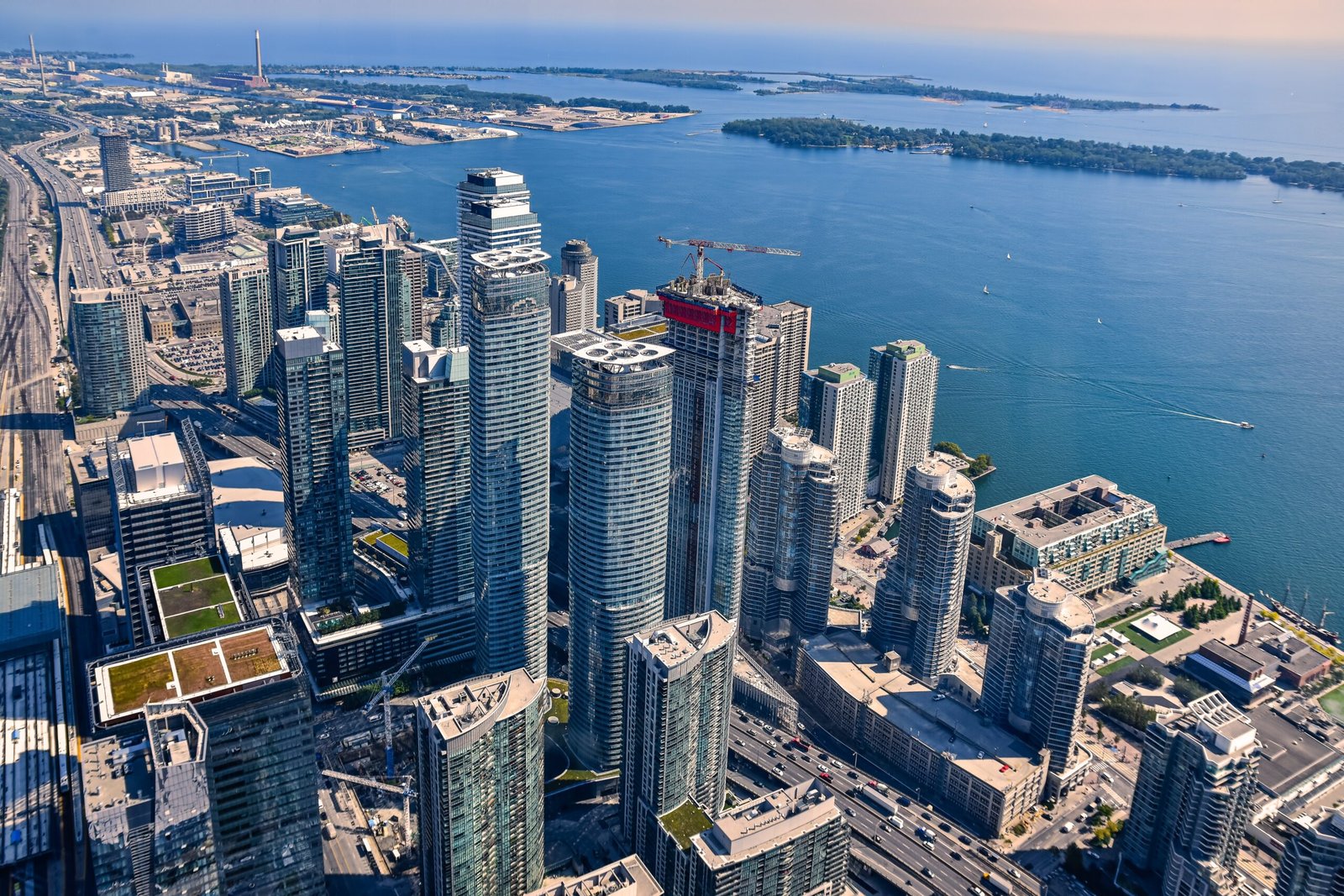

Vancouver Multi-Family Market: A Structural Inflection Point for Investors and Developers
The Headlines at a Glance
| Metric | Current | Context |
|---|---|---|
| Vacancy Rate | 5.0% | Decade average was 2.1% |
| 12-Month Rent Growth | -1.7% | First sustained decline in recent history |
| Units Under Construction | 23,269 | 14.7% of total inventory |
| Average Market Rent | $2,352/unit | Highest in Canada |
| YTD Sales Volume | $184.1M | Down sharply from $1.1B in 2025 |
| Cap Rates | 3.75%–4.75% | Expanded ~50–100 bps over two years |
Vancouver’s multi-family market has entered a period of structural recalibration. After a decade of near-zero vacancy, relentless rent growth, and compressed cap rates, the market is now absorbing the consequences of a historic construction surge. For investors and developers, understanding the granular dynamics at play is essential — because this is not a uniform correction.
Also Read This Report : Vancouver’s Office Market: Resilience in a Shifting Tide
Vacancy: A Two-Year Reset in Progress
Vacancy has risen more than 200 basis points over the past 12 months, reaching 5.0% — a level not recorded in the modern era of this market. The decade-long average sat at just 2.1%. This is not a temporary blip; forecasts suggest the overall vacancy rate will peak near 6% before gradually declining through the latter part of the decade.
The divergence by asset class is critical to understand:
- 4 & 5 Star: Vacancy stands at 11.6% and may climb to 15% as remaining pipeline delivers. Aggregated vacancy for buildings completed since January 2025 is nearly 40%.
- 3 Star: Vacancy at 3.8%, rising but comparably modest.
- 1 & 2 Star: Vacancy at 2.7%, with further expansion expected to be marginal.
The lease-up challenge is most acute in newer, high-density developments. Stabilization is taking upwards of two years in larger projects. Developers report consistent failure to achieve pro forma rents, and rental incentive programs have become standard across the new supply segment.
The single most consequential near-term delivery is the first phase of Senáḵw — a 1,408-unit, 39-storey development in Vancouver’s Westside submarket, expected to complete in July 2026. Its absorption trajectory will serve as a market-wide benchmark.
Supply Pipeline: Unprecedented by Any Canadian Measure
Vancouver is currently constructing more rental units as a percentage of existing inventory than any other North American market, except Calgary. The numbers are significant:
- 119 properties totalling 23,128 units are under construction — representing 14.7% of current inventory
- The average project size is 194 units
- The largest single project under construction is the 2,450-unit Brentwood Block (Grosvenor Group), expected in late 2029
Year-over-year deliveries are forecasted to reach 8,619 units in 2026 alone — the highest annual figure on record. The construction ratio (deliveries vs. absorption) for 4 & 5 Star assets currently sits at just 0.6x, meaning supply is outpacing demand by a wide margin in this segment.
The pipeline concentration is heaviest in Burnaby (43.6% of all under-construction units) and Vancouver Westside (17.4%), followed by Surrey/Langley/White Rock (21.3%) and Tri-Cities & Ridge Meadows (32.8%).
Rents: Correction Underway, But Context Matters
At $2,352/unit, Vancouver commands the highest average rent in Canada. However, the market is now 12 months into a period of negative rent growth:
- Asking rent growth: -1.7% year-over-year
- Effective rent growth: -2.2% year-over-year (reflecting concessions)
- The trough forecast: effective rent growth hits -2.8% in Q1 2026 before beginning a slow recovery
By submarket, the steepest declines are concentrated in Burnaby (-3.9% asking), Richmond/Delta (-3.5%), and New Westminster (-2.0%). North Shore (-1.5%) and Vancouver Westside (-1.3%) are showing the most resilience.
The affordability constraint is a structural floor on landlord pricing power. Median household income sits at approximately $110,000, while rents have risen 20% over the past five years. Average rents now regularly consume more than 30% of pre-tax household income — limiting the ability to push rents even when demand recovers.
By bedroom type, bachelor and 1-bedroom vacancy has risen most sharply since 2024, aligning with the product mix delivered in recent high-rise development.
Investment Market: Volume Decline, Cap Rate Discovery
After two strong years — $1.3B in 2024 and $1.1B in 2025 — transaction volume has dropped sharply in early 2026. First-quarter volume reached only $120M, and YTD figures stand at $184.1M. The momentum that characterized 2024–2025 has clearly stalled.
Key investment dynamics as of mid-2026:
Cap rate expansion: Cap rates have widened by approximately 50–100 basis points over two years, now ranging from 3.75% to 4.75% depending on asset quality and vintage. Stabilization is expected through 2026 as sellers adjust their pricing expectations.
New construction trades: The landmark Realstar acquisition of Aster and Yarrow (212 units, east Vancouver) plus 388 Kaslo St. — totalling $192.25M at $632,400/unit — set the tone for institutional appetite in new product. The blended cap rate of 4.0% was among the first high-density newly built transactions to price out of the upper 3% range.
Legacy assets: Older buildings (3 Star, 1960s–1980s vintage) are transacting above 4.25%, with some Burnaby trades pricing at 4.5%–4.75%. These are attracting local private capital seeking yield plus redevelopment optionality.
Asset values: Broadly down approximately 10% from peak, with residential land values in some areas having softened by as much as 50%, according to industry representatives. Distressed development sites entering foreclosure are increasing.
Buyer profile: REITs (CapREIT), institutional investors (Realstar, Minto), and the Provincial Housing Corp. are among the most active acquirers. Merchant builders seeking exits on completed buildings — particularly those with lengthy lease-up timelines — are the primary source of new listings.
Economic Context: Headwinds Are Real
The macro backdrop amplifies the supply-side pressure:
- Unemployment: 6.3% average over the past year; job growth not expected to improve in the near term
- GDP growth: Estimated at 2.1% in 2025, with a forecast downgrade to 1.5% in 2026
- Population: Vancouver is projected to record its first-ever population decline in 2026, driven by revised federal immigration targets. Recovery is expected from 2027 onward
- Employment by sector: The market is currently experiencing broad-based job losses across manufacturing (-6%), transportation (-10.2%), and retail (-8.7%), partially offset by gains in government (+13%) and construction (+12.6%)
The population decline forecast — however temporary — removes one of the market’s most reliable demand supports precisely when supply is peaking. This timing is the central risk for investors underwriting near-term stabilization.
Submarket Scorecard for Investors
| Submarket | Vacancy | 12-Mo Rent Growth | Under Construction (% of Inv) | View |
|---|---|---|---|---|
| Richmond/Delta | 1.6% | -3.5% | 12.0% | Tight vacancy, rent under pressure |
| Downtown Vancouver | 2.6% | -1.7% | 2.4% | Stable, limited new supply |
| North Shore | 3.4% | -1.5% | 5.6% | Resilient fundamentals |
| New Westminster | 4.5% | -2.0% | 4.7% | High absorption, watch concessions |
| Burnaby | 5.7% | -3.9% | 43.6% | Heaviest pipeline pressure |
| East Vancouver | 5.7% | -1.5% | 15.7% | Strong absorption relative to vacancy |
| Surrey/Langley | 8.1% | -2.6% | 21.3% | Growth submarket, elevated risk |
| South Vancouver | 8.4% | -1.6% | 11.2% | Highest vacancy in market |
What This Means for Investors and Developers
For value-add buyers: The current environment favors acquisitions of older, stabilized assets (3 Star, pre-2000 vintage) near transit infrastructure. Cap rates in the 4.25%–4.75% range on these assets offer yield premiums not seen since the mid-2010s. Redevelopment potential remains a valuation floor for transit-proximate properties.
For institutional investors: New construction at the right basis is available. The market is pricing in risk — but the Realstar transaction suggests institutions will transact at yields above 4.0% on high-quality new product. Patience on lease-up timelines is a prerequisite.
For developers: Current conditions represent the most challenging development environment in over 20 years by developer accounts. Pro forma rents are not being achieved. Entitlement timelines remain extended. Land values have softened substantially. Any new project underwriting must stress-test for vacancies of 15%+ in the first 18–24 months post-delivery.
For land holders: Expect continued softening in land values through 2026, with stabilization dependent on a visible turn in absorption and rent growth — most likely not before 2027.
The Outlook: 2027 as the Probable Inflection
The forecast suggests vacancy peaks near 6% in late 2026 before beginning a multi-year descent as the construction pipeline thins and population growth resumes. Effective rent growth is expected to return to positive territory by 2027, with the market gradually recovering toward a normalized 4–5% range through the end of the decade.
For investors with a medium-term horizon, the current period represents a rare window where Vancouver — historically one of the most risk-on multifamily markets in North America — is offering genuine yield expansion and below-peak asset pricing. Execution risk is real, but the structural demand case for Vancouver rental housing remains intact beyond the current supply cycle
