
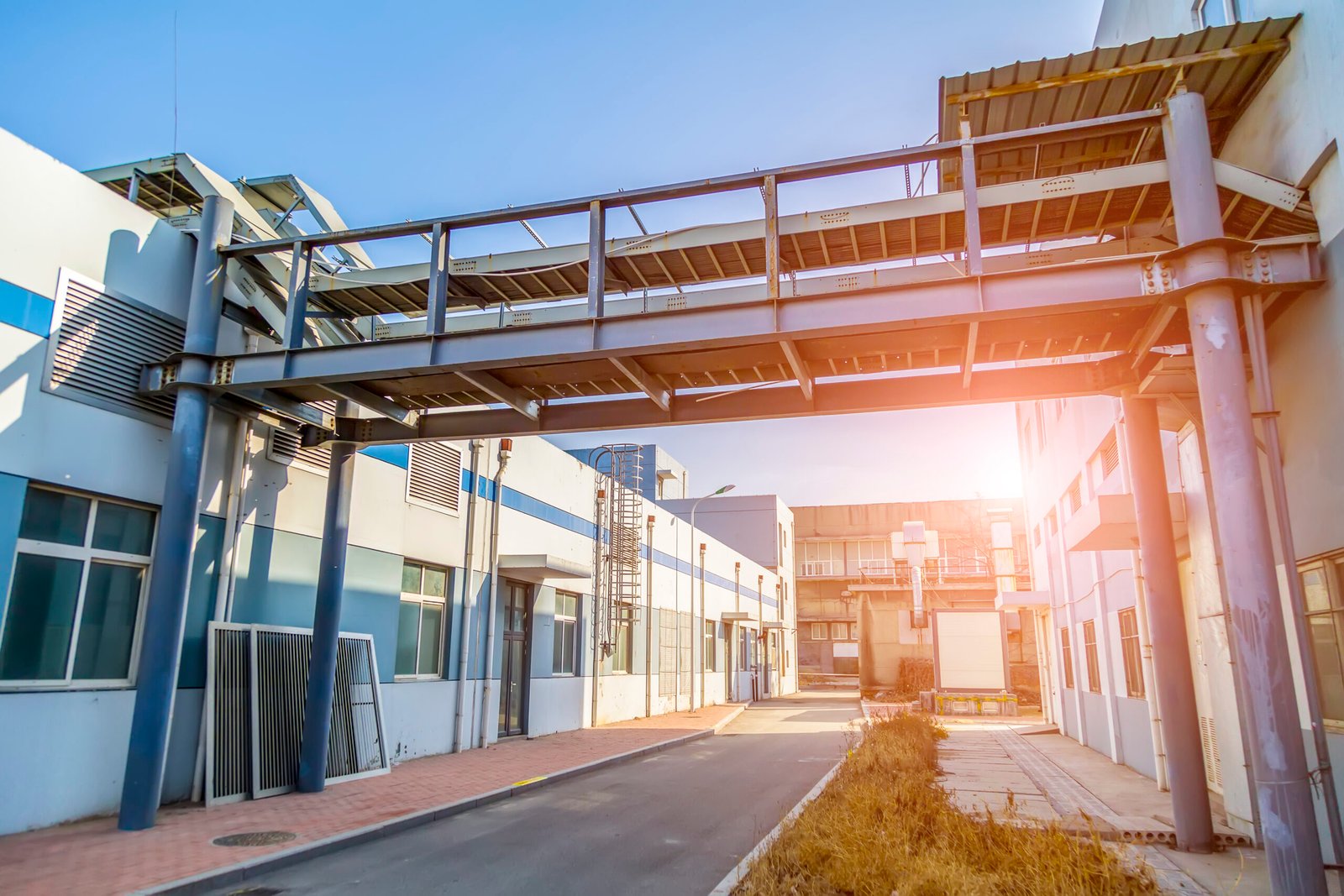

Why Industrial & Logistics Real Estate Remains Strong in 2026 industrial real estate
If you follow commercial real estate in Canada, you have probably noticed that industrial real estate keeps showing up in conversations about where smart money is going. While office markets are still finding their footing and retail continues to evolve, industrial and logistics properties have held their ground — and in many Canadian markets, they are still outperforming.
This blog breaks down why that is happening, what is driving demand in 2026, and what investors, business owners, and property professionals in Canada need to understand about this asset class right now.
You Should Also Read This : The Commercial Real Estate Space Paradox: Why Canada Could Have Too Much Space and Not Enough of the Right Space
What Is Industrial Real Estate?
Before diving into the why, it helps to be clear on what industrial real estate actually includes.
Industrial real estate covers a broad range of property types:
- Warehouses and distribution centres — large buildings used to store and ship goods
- Logistics facilities — properties designed specifically for the movement of goods, often near highways, rail lines, or airports
- Light industrial — smaller buildings used for manufacturing, assembly, or storage
- Flex industrial — mixed-use buildings that combine warehouse space with office or showroom space
- Cold storage — temperature-controlled facilities used by grocery, pharmaceutical, and food processing companies
- Data centres — increasingly classified as industrial, these facilities house servers and digital infrastructure
Each of these property types serves a different purpose, but they all share one thing in common in Canada right now: demand is strong and supply is struggling to keep up.
Why Industrial Real Estate Is Still Performing in 2026
E-Commerce Is Not Slowing Down
The shift to online shopping changed the industrial real estate market permanently. When Canadians buy online, those goods have to be stored somewhere before they arrive at the door. That means warehouses, fulfillment centres, and last-mile delivery hubs.
Canada’s e-commerce sector has continued to grow year over year. Major retailers and logistics companies have been expanding their footprints, and newer players are entering the market. Every percentage point of growth in online retail translates directly into demand for industrial space.
Last-mile delivery — the final leg of a shipment from a distribution hub to the customer’s door — has become one of the most competitive areas in logistics. Companies need facilities close to population centres to make same-day and next-day delivery economically viable. This is why you are seeing industrial development not just on the outskirts of cities but in locations closer to urban cores.
Supply Chain Rethinking After Global Disruptions
The supply chain disruptions of the early 2020s left a lasting mark on how Canadian businesses manage inventory. Companies that once relied on lean, just-in-time inventory models learned how fragile those systems could be when global supply chains break down.
Many businesses responded by holding more inventory domestically. More inventory requires more storage space. This shift in inventory strategy — sometimes called “just-in-case” inventory management — has been a steady driver of industrial leasing demand across Canada.
Additionally, there has been a broader trend toward nearshoring — moving production and sourcing closer to home rather than relying exclusively on overseas manufacturing. As more businesses look to build resilient supply chains with North American partners, Canadian industrial facilities benefit.
Tight Vacancy Rates in Key Markets
One of the clearest signals of a healthy industrial market is vacancy rate, and Canadian industrial markets have maintained tight vacancy in most major center’s.
Markets like Greater Toronto, Metro Vancouver, Calgary, and Edmonton have seen sustained low vacancy in the industrial sector. When vacancy is low, landlords can maintain or increase rents, and properties hold their value. For investors, this means more predictable income and stronger asset performance.
Even secondary markets — places like Abbotsford, Kitchener-Waterloo, Hamilton, and Red Deer — have seen growing demand for industrial space as businesses look for alternatives to increasingly expensive properties in primary markets.
Population Growth Is Driving Logistics Demand
Canada has one of the highest per-capita immigration rates among developed countries, and that growth is concentrated in major urban areas. More people means more consumption, more deliveries, and more demand for the logistics infrastructure that supports modern retail.
This is a straightforward equation: as Canada’s population grows, the country needs more industrial capacity to move and store goods. That demand does not disappear when the economy softens — people still need food, medicine, household goods, and everything else that flows through industrial facilities.
Infrastructure Investment Is Supporting the Sector
Federal and provincial infrastructure spending in Canada — including highway expansions, port upgrades, and rail improvements — directly supports industrial real estate. Properties near improved transportation corridors become more valuable. Businesses choose locations based on accessibility, and when infrastructure improves, industrial demand in those areas follows.
The Port of Vancouver, one of the busiest ports in North America, continues to drive significant industrial demand in Metro Vancouver and the Fraser Valley. Port of Prince Rupert is growing as well. In Ontario, the Highway 401 corridor remains one of the most active industrial real estate markets in the country.
Key Industrial Real Estate Markets in Canada for 2026
Greater Toronto Area (GTA)
The GTA remains the largest industrial market in Canada by volume. The challenge here is land — available industrial land in Toronto proper is extremely limited, which has pushed development to surrounding regions like Halton, Durham, Peel, and York.
Rents in the GTA industrial market have risen significantly over the past several years. For investors, that means strong income potential. For tenants, it means finding affordable space increasingly requires looking further from the urban core.
Metro Vancouver and Fraser Valley
Vancouver’s industrial market is one of the tightest in North America. The geography of Metro Vancouver — mountains to the north, ocean to the west, US border to the south — limits how much industrial land can be developed. This constraint has kept vacancy extremely low and pushed values and rents to among the highest in Canada.
Fraser Valley has absorbed much of the overflow demand from Metro Vancouver. Cities like Abbotsford, Langley, and Chilliwack have seen significant industrial development, and the area continues to attract logistics and distribution companies that need large-format space at more accessible prices.
Calgary and Edmonton
Alberta’s two major cities have had a strong run in industrial real estate. Calgary in particular has benefited from a diversifying economy, strong in-migration, and growing logistics infrastructure. The city’s central location within Canada makes it a natural distribution hub for companies serving western Canada.
Edmonton’s industrial market is tied closely to the energy sector but has been broadening. Food processing, manufacturing, and logistics are all growing components of Edmonton’s industrial tenant base.
Hamilton and Kitchener-Waterloo
These Ontario markets have grown significantly as industrial tenants look for alternatives to GTA pricing. Hamilton’s port and rail access make it attractive for certain industries, while Kitchener-Waterloo’s growing tech and manufacturing base supports demand for flex and light industrial space.
Montreal
Montreal is a strong industrial market with good fundamentals — central location, bilingual workforce, solid transportation infrastructure, and lower costs than Toronto or Vancouver. The city has a deep manufacturing heritage and is seeing renewed interest from logistics and distribution companies.
What Is Driving Industrial Rents Higher?
Understanding why rents are rising in industrial real estate helps explain why the asset class continues to attract investors.
Land scarcity in urban markets. In cities like Vancouver and Toronto, there is simply not much land left to build on. What exists is expensive, and development costs are high. This limits how much new supply can enter the market, which keeps pressure on rents.
Construction costs. Building a new industrial facility in Canada is significantly more expensive than it was five years ago. Higher material and labour costs mean developers need higher rents to make projects viable.
Longer lease terms from quality tenants. Major logistics companies, grocery chains, and pharmaceutical distributors typically sign long leases — five to fifteen years in many cases. When these tenants renew or new facilities are built to suit, rents reset to market levels, which in recent years have been considerably higher than previous lease terms.
Specialized facility requirements. Cold storage, high-bay warehouses, and data centres all require specialized construction. The limited supply of these specialized facilities drives up rents for tenants who need them.
Industrial Real Estate as an Investment
For Canadian investors looking at commercial real estate, industrial properties have several characteristics that make them attractive:
Predictable income. Industrial tenants tend to sign long leases and stay. Moving a distribution operation is expensive and disruptive, so tenants have a strong incentive to renew. This means lower turnover and more stable income for property owners.
Triple-net leases are common. In many industrial leases, the tenant pays operating costs including property taxes, insurance, and maintenance on top of base rent. This structure gives investors more predictable net income with fewer surprise expenses.
Lower management intensity. Compared to retail or multi-family residential, industrial properties typically require less day-to-day management. There are fewer tenants, fewer maintenance calls, and simpler property management.
Strong demand fundamentals. As discussed throughout this blog, the structural drivers of industrial demand — e-commerce, population growth, supply chain investment — are not short-term trends. They are long-term shifts in how economies function.
Value-add opportunities. Older industrial properties in good locations can offer strong value-add potential through improvements, intensification, or repositioning for higher-value uses like cold storage or data center’s.
Challenges to Watch in the Industrial Sector
No market comes without risk, and industrial real estate in Canada has a few areas worth monitoring.
Interest rate sensitivity. Commercial real estate values are sensitive to interest rates, and industrial is no exception. Higher borrowing costs affect both investors (higher financing costs reduce returns) and tenants (businesses facing higher costs may consolidate space).
New supply coming online. In some markets, a significant amount of new industrial development has been underway. As new buildings deliver, vacancy rates can rise temporarily, which can put pressure on rents. The key is location — well-located properties near transportation infrastructure tend to lease up faster.
Automation changing space requirements. Warehouse automation — robotics, automated picking systems, vertical storage — is changing how much space companies need. Some highly automated facilities can handle the same throughput in less square footage. Over time, this could affect demand per unit of output, though it also creates demand for specialized, high-spec facilities.
Environmental and sustainability requirements. Tenants — particularly large corporations with sustainability commitments — are increasingly looking for energy-efficient facilities with features like LED lighting, EV charging, solar readiness, and LEED certification. Older industrial buildings that do not meet these standards may face challenges attracting quality tenants.
Commonly Asked Questions About Industrial Real Estate in Canada
What makes industrial real estate a good investment in Canada?
Industrial properties combine strong tenant demand, long lease terms, and relatively simple management. In Canada’s major markets, structural supply constraints have kept vacancy low and supported rent growth. These fundamentals make industrial one of the more consistent-performing commercial asset classes available to Canadian investors.
Is industrial real estate affected by a recession?
It can be, but industrial tends to be more resilient than other commercial property types. People still need goods delivered, stored, and distributed even during economic downturns. Essential industrial tenants — grocery distributors, pharmaceutical companies, infrastructure-related businesses — tend to remain stable regardless of the broader economic cycle.
What is cap rate for industrial properties in Canada?
Cap rates vary by market and property quality. In high-demand markets like Metro Vancouver and GTA, industrial cap rates have been compressed due to strong investor demand. Secondary markets offer higher cap rates with somewhat more risk. Working with a commercial real estate broker who specializes in industrial will give you the most accurate picture for a specific market.
How is industrial real estate different from commercial real estate?
Industrial real estate is a subcategory of commercial real estate. Commercial real estate is a broad term that includes office, retail, industrial, and multi-family. Industrial specifically refers to properties used for manufacturing, storage, distribution, and logistics purposes. Industrial leases, tenant profiles, and property management are all distinct from office or retail.
What does a triple-net lease mean in industrial real estate?
A triple-net (NNN) lease means the tenant is responsible for paying base rent plus their share of property taxes, building insurance, and maintenance costs. For landlords, this reduces exposure to operating cost increases. For tenants, it provides transparency but requires them to budget for variable operating costs.
Final Thoughts
Industrial real estate in Canada enters 2026 with a strong foundation. E-commerce, supply chain investment, population growth, and land scarcity in major markets have all contributed to a sector that has consistently outperformed expectations.
This does not mean industrial is without risk or that every property in every market is a good investment. Location, tenant quality, lease structure, and market conditions all matter. But the structural drivers that have made industrial real estate one of Canada’s strongest commercial asset classes are not disappearing.
For investors evaluating where to put capital in commercial real estate, industrial deserves a serious look. For businesses looking at their own real estate strategy, understanding where the industrial market is headed matters for planning — whether you are renewing a lease, considering purchasing your own facility, or looking at expansion.
If you are exploring industrial real estate opportunities in Canada, connecting with a commercial real estate professional who specializes in this sector is the best first step. The market moves, deals happen quickly, and having the right guidance makes a meaningful difference
